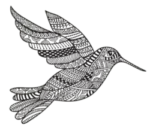

(Or: How to Break the Laws of Physics with Feathers and Attitude)
If nature were holding a contest for most outrageous flight capabilities, hummingbirds wouldn’t just win—they’d force the judges to create entirely new categories. These tiny aerial masters have essentially taken everything we thought we knew about flight and turned it into a suggestion rather than a rule.
Let’s start with some numbers that make aeronautical engineers question their career choices:
- Wingbeats: Up to 80 times per second in normal flight
- Maximum speed: Over 200 beats per second during courtship dives
- Rotation capability: 180 degrees in any direction
- Sustained hovering: Indefinite
- Energy efficiency: Puts modern drones to shame
The Power Plant Paradox
Imagine trying to run a jet engine inside a matchbox while maintaining perfect control. That’s essentially what hummingbirds achieve with their flight muscles, defying conventional wisdom about power-to-weight ratios and energy management.
The power system includes:
- Specialized flight muscles make up 30% of body weight
- Unique fiber types for sustained high-speed operation
- Enhanced oxygen delivery systems
- Turbocharged metabolism
- What amounts to a living nuclear reactor in miniature
The Wing Design Revolution
If conventional bird wings are like fixed-wing aircraft, hummingbird wings are more like nature’s answer to the helicopter—except they make helicopters look clumsy by comparison. These living rotors represent one of evolution’s most remarkable achievements in aerodynamic engineering.
Key design features include:
- Flexible wing bones that resist fatigue
- Specialized feather structure for maximum lift
- Unique joint capabilities allowing 180-degree rotation
- Precision control surfaces
- Built-in vibration-dampening systems
The Hover Master Class
In the world of aerial maneuvers, hovering is perhaps the most demanding skill. Hummingbirds don’t just hover—they make it look easy while maintaining precision that would make military drone operators jealous.
Hovering capabilities include:
- Figure-eight wing pattern
- Continuous lift generation
- Perfect stability maintenance
- Instant directional changes
- The aerial equivalent of standing still on a tightrope
The Speed Demons
Nothing about hummingbird wing mechanics makes sense until you consider the speeds involved. These tiny aviators operate at velocities that should, by all rights, tear their wings apart.
Speed-related adaptations include:
- Reinforced wing structures
- Advanced neural control systems
- Rapid-fire muscle contractions
- Specialized energy delivery
- What looks suspiciously like time manipulation
The Muscle Mystery
Deep within those tiny wings lies a miracle of biological engineering. Hummingbird flight muscles operate at frequencies that would destroy conventional bird muscles.
Muscle innovations include:
- Specialized fiber types
- Enhanced energy storage
- Rapid calcium cycling
- Unique neural control
- The biological equivalent of a Formula 1 engine
The Neural Control Center
Controlling wings at these speeds requires processing power that puts some computers to shame. Hummingbird brains have evolved to handle calculations that would overwhelm most pilots.
Neural adaptations include:
- Ultra-fast signal processing
- Enhanced motor control centers
- Specialized sensory integration
- Real-time flight adjustments
- What appears to be organic supercomputing
The Energy Management Game
Operating at such high speeds requires incredible energy management. Hummingbirds have developed systems that would make efficiency experts weep with joy.
Energy systems include:
- Rapid sugar metabolism
- Efficient oxygen utilization
- Heat management systems
- Energy storage solutions
- The metabolic equivalent of a perfectly tuned race car
The Weather Warriors
Perhaps most impressively, these wing mechanics must function in all weather conditions. Rain, wind, and temperature variations that would ground most aircraft are just another day at the office for hummingbirds.
Weather adaptation features:
- Water-resistant feather structure
- Wind compensation systems
- Temperature regulation
- Stability enhancement
- All-weather operational capability
The Evolutionary Tale
How did such remarkable wing mechanics evolve? It’s a story of progressive refinement that pushes the boundaries of what we thought was biologically possible.
Evolutionary achievements include:
- Increasingly specialized wing structures
- Enhanced muscle development
- Refined neural control
- Optimized energy systems
- What amounts to millions of years of flight testing
The Future of Flight
Scientists studying hummingbird wing mechanics continue to uncover new mysteries and potential applications for human technology.
Research applications include:
- Drone design inspiration
- Energy efficiency improvements
- Flight control systems
- Miniature aircraft development
- Bio-inspired engineering solutions
Conclusion: Nature’s Aviation Masterpiece
Hummingbird wing mechanics represent one of nature’s most extraordinary achievements in flight engineering. These tiny masters of the air continue to challenge our understanding of what’s possible in aerial locomotion.
Remember: The next time you see a hummingbird zipping past your flowers, you’re witnessing an aviation miracle that makes our most advanced technology look primitive by comparison.
Post Script: Some aerospace engineers suspect hummingbirds are actually using anti-gravity technology and just flap their wings to show off. The birds maintain a dignified silence on the matter, but their smug expressions tell all.